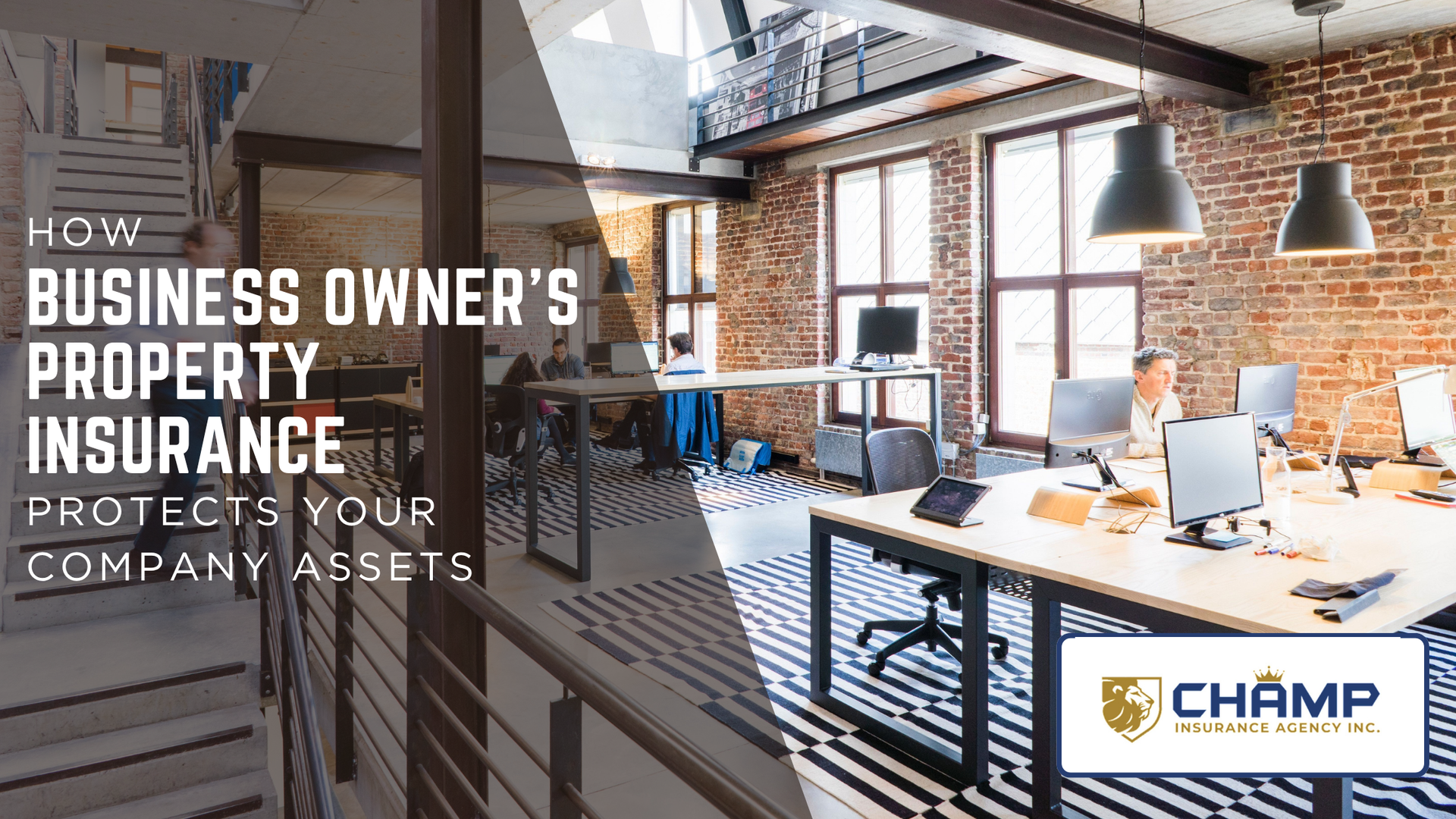
A business can accumulate valuable equipment, inventory, furniture, technology, and improvements long before the owner realizes how expensive replacing everything at once could be. For companies in San Diego, CA, understanding how business property insurance works can help ensure those assets are protected against covered losses that could otherwise disrupt operations.
What Is Business Owner’s Property Insurance?
The term
“business owner’s property insurance” generally refers to commercial property coverage that protects physical assets owned or used by a company. For many small and midsize businesses, this coverage is included within a Business Owner’s Policy, commonly called a BOP.
A BOP typically combines commercial property insurance with general liability coverage and, in many cases, business income protection.
The property portion is designed to help repair or replace eligible business property after a covered loss.
Depending on the policy, this may include:
- Buildings owned by the business
- Furniture and office equipment
- Computers and electronics
- Machinery
- Inventory
- Supplies
- Certain tenant improvements
- Signs and fixtures
Coverage still depends on the policy limits, deductible, valuation method, exclusions, and cause of loss.
Buildings and Structures May Be Protected
If the business owns the building where it operates,
commercial property insurance can help protect the structure itself against covered causes of loss.
For example, coverage may apply when a building is damaged by a covered fire, windstorm, vandalism, or another insured event.
Building coverage can include more than walls and roofing. Permanently installed fixtures, certain mechanical systems, and attached improvements may also fall within the insured property definition.
Business owners should periodically review the building limit because reconstruction costs can change substantially over time.
The amount originally paid for a commercial property is not necessarily the same as what it would cost to rebuild after a major loss.
Business Personal Property Covers Company Assets Inside the Premises
Business personal property coverage generally protects movable assets used in daily operations.
A professional office may need coverage for computers, furniture, printers, and telecommunications equipment. A retailer may have substantial inventory and display fixtures. A contractor may own specialized tools and equipment.
In our work with business clients, a common issue is underestimating how much property has accumulated over several years.
Small purchases can add up quickly.
A business inventory should include the approximate replacement cost of:
- Desks and chairs
- Computers and monitors
- Point-of-sale equipment
- Inventory
- Shelving
- Machinery
- Tools
- Appliances
- Office supplies
Keeping photographs, receipts, serial numbers, and purchase records can also make the claims process easier.
Tenant Improvements Deserve Special Attention
Businesses that lease their premises may invest heavily in improvements even though they do not own the building.
Examples can include:
- Custom flooring
- Built-in cabinetry
- Lighting
- Interior walls
- Specialized electrical work
- Display installations
These are often called tenant improvements or betterments.
The landlord’s insurance should not automatically be assumed to cover improvements paid for by the tenant. The lease agreement and
insurance policy should be reviewed together to determine who is responsible for insuring them.
A restaurant or retailer operating around the Gaslamp Quarter, for example, could invest significant amounts in interior improvements that need to be reflected in the company’s property limits.
What Causes of Loss May Be Covered?
Commercial property insurance can protect against a range of covered events, depending on the policy form.
Common examples may include:
- Fire
- Smoke
- Theft
- Vandalism
- Certain wind damage
- Certain water damage
- Falling objects
Not every loss is covered.
Flooding, earthquakes, equipment wear, deterioration, pests, and other risks may be excluded or require separate coverage or endorsements.
Business owners should ask specifically which causes of loss are covered rather than relying on the assumption that
“property insurance” protects against everything.
Replacement Cost and Actual Cash Value Can Affect the Claim
How covered property is valued can significantly change the amount paid after a loss.
Replacement cost coverage generally considers the cost to replace damaged property with comparable new property, subject to policy conditions.
Actual cash value usually takes depreciation into account.
Suppose a business loses a six-year-old computer system in a covered fire. An actual cash value settlement may be substantially lower than the amount required to purchase new replacement equipment.
Business owners should confirm which valuation method applies to buildings, equipment, inventory, and other property.
Does Property Insurance Cover Equipment Away From the Business?
This depends on the policy.
Standard commercial property insurance is often centered on property located at the insured premises. Businesses that regularly move equipment between locations may need inland marine insurance or another specialized form of coverage.
This can be particularly important for:
- Contractors
- Photographers
- Mobile service businesses
- Event companies
- Businesses transporting equipment
- Companies storing property off-site
A contractor carrying expensive tools to projects in Mission Valley may face different property exposures from an office where computers remain at one fixed location.
Coverage should reflect where business property actually goes.
Business Income Coverage Can Protect Operations Too
Physical property is only part of the financial impact after a serious loss.
If a covered fire damages a business so severely that operations must stop temporarily, the company may continue facing payroll, rent, loan payments, and other expenses while revenue declines.
Business income coverage, often included in a BOP, may help replace certain lost income and continuing expenses following a covered property loss.
Business owners should review how long coverage can continue, whether a waiting period applies, and how income would be documented.
Financial records should be backed up securely and stored somewhere other than only at the business premises.
Review Property Limits as the Company Grows
Business property values rarely remain unchanged.
A company may purchase more inventory, renovate its location, add computers, upgrade machinery, or expand into another space.
If those changes are not reflected in the policy, coverage limits may become outdated.
For businesses in San Diego, CA, an annual insurance review can help confirm that property values, deductibles, building limits, equipment schedules, and endorsements still reflect current operations.
Conclusion
Business property insurance helps protect many of the physical assets a company depends on, including buildings, equipment, furniture, inventory, and certain improvements. The effectiveness of that protection depends on accurate property limits, appropriate valuation methods, and an understanding of exclusions and specialized risks. Keeping an updated inventory and reviewing coverage as the business grows can help reduce the chance of discovering an insurance gap after a major loss.
At Champ Insurance Services, we aim to simplify the insurance process while delivering exceptional service and affordable options tailored to your needs. For more information or a free quote, call us at 949-535-1099 or
CLICK HERE.
Disclaimer: The information provided in this blog is intended for general knowledge only. Consult a licensed insurance professional for personalized advice suited to your specific insurance requirements.
Champ Insurance Services
San Diego, CA
949-535-1099
Service@cisrocks.com
https://www.cisrocks.com/