An injury connected to a business can trigger very different insurance protections depending on who was hurt and how the incident occurred. For employers in San Diego, CA, understanding the division between workers’ compensation and general liability is essential because one policy cannot reliably substitute for the other.
The Core Difference Between the Two Policies
Workers’ compensation primarily addresses job-related injuries and occupational illnesses suffered by employees. Commercial general liability primarily addresses covered bodily injury, property damage, and certain personal or advertising injury claims brought by customers, vendors, landlords, and other third parties.
A simple way to distinguish them is:
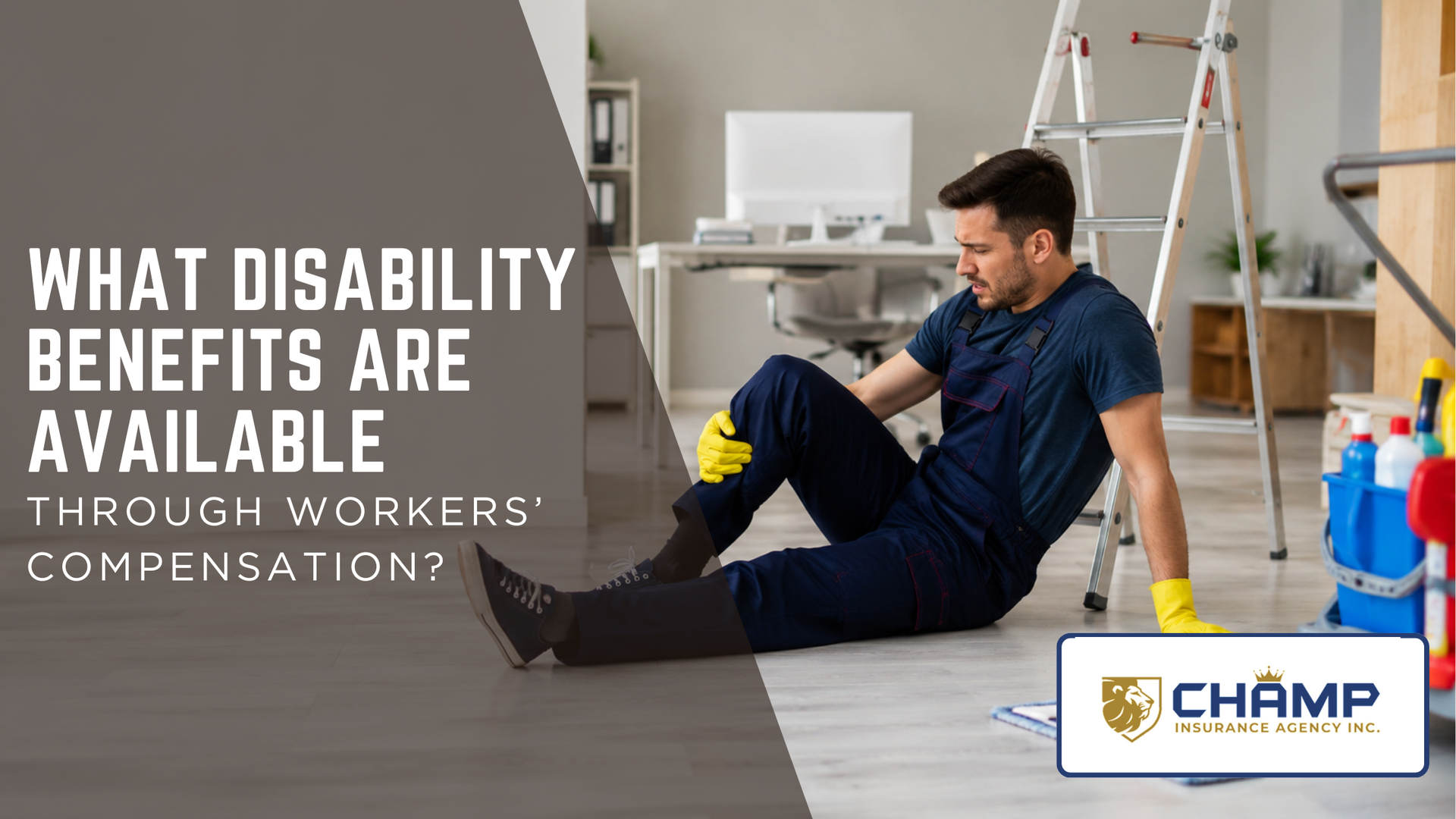
- An employee falls from a ladder while working: workers’ compensation may apply.
- A customer trips over the same ladder: general liability may apply.
- An employee damages a customer’s property: general liability may address the customer’s property damage.
- The employee is injured during that incident: workers’ compensation may address the employee’s injury.
Some accidents can therefore involve both policies, with each responding to a different part of the loss.
What Workers’ Compensation May Pay For
California employers are generally required to maintain workers’ compensation coverage when they have one or more employees. The requirement applies even when the business has only one employee.
Workers’ compensation is designed to provide specified benefits without requiring the employee to prove that the employer was negligent.
Potential benefits include:
- Necessary medical treatment
- Temporary disability payments
- Permanent disability benefits
- Supplemental job displacement benefits
- Return-to-work assistance
- Death benefits for qualifying dependents
The California Division of Workers’ Compensation identifies medical care, temporary and permanent disability, supplemental job displacement, return-to-work support, and death benefits as core parts of the state system.
For example, if a warehouse employee injures a shoulder while lifting inventory, workers’ compensation may pay for treatment and part of the employee’s lost wages during recovery, subject to California law and the facts of the claim.
What General Liability May Pay For
Commercial general liability, often called CGL insurance, protects a business against certain claims involving harm caused to people or property outside the company.
California describes CGL as coverage for financial loss arising from business acts that cause bodily injury or property damage to others. Common sections include premises, operations, products, completed operations, and contractual liability.
A policy may help pay for:
- Legal defense expenses
- Settlements
- Court judgments
- Third-party medical expenses
- Repairs to damaged third-party property
- Certain personal and advertising injury claims
Examples include:
- A client slipping on a wet office floor
- A contractor damaging a customer’s wall
- A product allegedly injuring a consumer
- Completed work causing later property damage
- A business facing a covered libel or advertising allegation
General liability typically does not pay the business’s own employee for an ordinary workplace injury. That exposure belongs primarily under workers’ compensation.
Why General Liability Does Not Replace Workers’ Compensation
A business owner may assume that a
general liability policy is enough because it includes bodily injury coverage. However, that protection is generally intended for third parties—not employees injured in the course of employment.
Employee injuries are commonly excluded from CGL coverage. The policy may also exclude obligations imposed by workers’ compensation law.
Without proper workers’ compensation coverage, an employer may be responsible for medical treatment, disability payments, legal expenses, and statutory penalties. California employers must generally obtain coverage through a licensed insurer, the State Compensation Insurance Fund, or an approved self-insurance arrangement.
The absence of coverage can also result in a stop order preventing the employer from continuing to use employee labor until valid insurance is obtained.
Why Workers’ Compensation Does Not Replace General Liability
Workers’ compensation protects employees, but it does not generally pay when a customer, delivery driver, landlord, or other third party is injured because of business operations.
Suppose a restaurant employee spills liquid near the entrance. If the employee slips while cleaning it and suffers an injury, workers’ compensation may apply. If a customer slips in the same area, the resulting claim would more likely fall under general liability.
Workers’ compensation also does not ordinarily cover:
- Damage to customer property
- Product liability claims
- Completed operations claims
- Advertising injury
- Landlord liability requirements
- Customer medical payments
Businesses that interact with the public, sell products, perform off-site work, or lease commercial space usually need general liability even when workers’ compensation is already in place.
Independent Contractors Can Create Complications
Calling a worker an independent contractor does not automatically make that classification legally correct.
California’s ABC test generally begins with the presumption that a worker is an employee unless the hiring entity can establish all required conditions or an applicable exception changes the analysis. The state also warns that a written contract labeling someone an independent contractor does not control the outcome by itself.
Misclassification can create serious problems involving:
- Workers’ compensation
- Payroll taxes
- Wage and hour requirements
- Insurance audits
- Employment benefits
- Legal penalties
A worker performing the company’s usual services under substantial direction may be treated as an employee despite being paid through an invoice or receiving a Form 1099.
Businesses should also collect certificates of insurance from legitimate subcontractors. The certificate should verify appropriate workers’ compensation and liability coverage, but it does not replace a careful review of the contractual relationship.
How Payroll and Job Duties Affect Workers’ Comp Premiums
Workers’ compensation premiums are commonly influenced by:
- Employee payroll
- Job classifications
- Claims experience
- Safety practices
- Industry
- Location
- Use of subcontractors
An office administrator presents a different injury exposure from a roofer, machine operator, restaurant cook, or delivery employee.
Classifying workers inaccurately can lead to additional premium during an audit. Business owners should describe actual duties rather than choosing the least expensive classification.
In our work with clients, a common issue we see is that job responsibilities expand during the policy year while the insurance classification remains unchanged. Hiring employees for driving, fieldwork, installation, or physical labor should prompt an immediate policy review.
How General Liability Limits Work
A
general liability policy commonly includes:
- Each-occurrence limit
- General aggregate limit
- Products-completed operations aggregate
- Personal and advertising injury limit
- Medical payments limit
- Damage-to-rented-premises limit
The each-occurrence limit restricts how much the policy may pay for one covered event, while the aggregate limits the amount available for multiple claims during the policy period.
A landlord, customer, or project owner may require specific limits and additional insured status. Businesses should review these requirements before signing contracts rather than discovering later that their existing policy does not comply.
An umbrella or excess liability policy may provide additional limits above qualifying general liability, commercial auto, and employer liability coverage.
Employer’s Liability Is Another Important Layer
Workers’ compensation policies commonly include employer’s liability coverage. This section may address certain employee-related lawsuits that fall outside the ordinary statutory workers’ compensation benefit system.
Examples may involve:
- A spouse alleging loss of consortium
- A third party seeking contribution from the employer
- Certain dual-capacity allegations
- Consequential injury claims by family members
Employer’s liability should not be confused with employment practices liability insurance, which addresses allegations such as discrimination, harassment, retaliation, or wrongful termination.
Practical Coverage Scenarios
Consider how the policies may respond:
Employee Cuts a Hand on Machinery
Workers’ compensation may provide medical and disability benefits. General liability ordinarily would not cover the employee’s injury.
Customer Is Injured by Falling Merchandise
General liability may provide defense and covered damages. Workers’ compensation does not apply because the injured person is not an employee.
Employee Damages a Client’s Equipment
General liability may cover the client’s property damage. If the employee is also injured, the workers’ compensation policy may address that injury.
Defective Product Injures a Buyer
Products-completed operations coverage under the CGL policy may respond, subject to exclusions and limits.
Employee Alleges Workplace Discrimination
Neither ordinary workers’ compensation nor general liability is designed primarily for that claim. Employment practices liability insurance may be needed.
Questions to Ask During a Coverage Review
Businesses in San Diego, CA should ask:
- Does the company have any workers who may legally be employees?
- Are payroll and job classifications current?
- Are subcontractors properly classified and insured?
- Does general liability cover all current operations?
- Are products and completed work included?
- What limits do leases and contracts require?
- Are defense costs paid within or outside the limits?
- Does the workers’ compensation policy include adequate employer’s liability limits?
- Is an umbrella policy appropriate?
- Are employment practices, cyber, and commercial auto exposures insured separately?
A professional office near Sorrento Valley may have relatively low physical injury exposure but substantial visitor and employment risks. A contractor working around Mission Valley may face greater job-site injuries, property damage, subcontractor issues, and completed-operations claims.
Conclusion
Workers’ compensation and general liability protect against different categories of loss. Workers’ compensation addresses qualifying employee injuries and occupational illnesses, while general liability addresses many covered claims brought by customers and other third parties. Most businesses with employees and public-facing operations need both policies, supported by accurate worker classifications, appropriate limits, and coverage tailored to the company’s actual activities.
At Champ Insurance Services, we aim to simplify the insurance process while delivering exceptional service and affordable options tailored to your needs. For more information or a free quote, call us at 949-535-1099 or
CLICK HERE.
Disclaimer: The information provided in this blog is intended for general knowledge only. Consult a licensed insurance professional for personalized advice suited to your specific insurance requirements.
Champ Insurance Services
San Diego, CA
949-535-1099
Service@cisrocks.com
https://www.cisrocks.com/